Friday, September 07, 2007

The Missing Peace


How do artists interpret the Dalai Lama? In 2004, when Randy Jayne Rosenberg was invited to curate the exhibition, she knew little about Buddhism and Tibet but understood the overarching vision: to portray His Holiness on a broad, universal platform.

Eighty artists from around the world tapped into their unique journeys and belief systems to create works showing how they perceive the Dalai Lama. The result is a tapestry of images, themes, and media that suggest the many roles the Dalai Lama plays within his world and ours: statesman, philosopher, politician, holy man, visionary, peacemaker, icon, and more.

The artists’ interpretations resonate with the great themes and ideals that the Dalai Lama embodies: the power of spirituality, the mystery of transcendence, universal interconnectedness, the need for peace. The exhibition begins with concrete concepts: the Dalai Lama’s appearance, religion, and homeland. It then circles outward into increasingly abstract and all-encompassing themes: human rights; compassion; the plight of people in exile; paths of transformation; universal responsibility; globalization; temporality; and impermanence.
This photograph by Richard Avedon was printed in 2003.
This video-based installation by Hi-Jin and David Hodge explores the temporal nature of life, featuring segments of interviews with more than 120 people. The installation is intended to promote reflection about who we are as human beings and how we are living in the world.
This painting by Guy Buffet imagines the Dalai Lama's response to petty annoyances.

With this intricate oil painting, Dario Camapanile imagines the day when peace is achieved. La Pace e con Noi (Peace is with Us), Artist Binh Dahn prints photographic images onto leaves, then casts the leaves in resin. His work addresses compassion, unconditional love, and the importance of forgiveness.

Brief History of Tibet, by Tenzing Rigdol

Seyed Alavi's works convert contemporary signage into drawings that prompt reflection on the nature of our lives as human beings. I Saw the Figure Five in Gold, by Ken Aptekar

http://www.rmanyc.org/

Love flow chart 爱情流程图


Flow chart, traditional method of representing in schematic form the flow of data in a system. it shows the points of input and output, the logic or sequence of the various processing steps in the system, and the relationship of one element of the system to the other parts of the system or to other information systems. It is an important tool for the improvement of processes. But, today a friend sent me "a love flow chart". I found the sequence are pretty systematic, however as saying goes "当局者迷,旁观者清" those closely involoved cannot see as clear as those outside. Therefore, insiders may aware the next step, but just out of their control.

饶了西藏吧!

在一个英文网站看到《凤凰周刊》24期封面文章关于西藏采矿与生态的一个简短报道。搜了很久就是找不到全文,下来也买不到这类周刊,超郁闷。So, this is all about ....

Phoenix Weekly continues its run of provacative covers with a cracked photograph of a Tibetan landmark and the headline, "The roar of guns shocks the Potala Palace." The cover story this issue describes the recent mining rage in Tibet. Because of its rich natural resources, Tibet is being dug up by hundreds of legal and illegal mining companies. And they're not just domestic enterprises either - more and more ventures are coming in backed by foreign investment.

No doubt this kind of unsustainable mining may irreversibly alter the ecology of Tibet. However, local people's attitudes are mixed. Mining can bring them more money and better jobs, and they do not want to live in mud houses any more.

但今天手气比较好。一搜就搜到一篇题为“饶了拉萨吧”的读后感,蛮不错地!

这期的《凤凰周刊》标题起得吓人,叫“炮声惊动布达拉宫”,如不看副标题,断以为这达赖一干人等要有狗急跳墙之举……赶紧买回来,细读。原来是写拉萨近几年开发造成的生态破坏,虚惊了一身冷汗。

文章介绍了由于地方政府对环境问题的忽视,对采矿行为的漠视,导至了大量采矿作坊的诞生,而后的表象是拉萨几天就会有一个山头消失,并且消失的速度越来越快……而西藏政府的态度是:原来踩在脚下几千年的土地居然如此金光闪闪……电力部门协调电力,更有一些官员和高参要把采矿业发展成为西藏的支柱产业,并乐观地估计五年之后,矿业对西藏的GDP贡献将占三分之一强……理由也相当让人佩服:我们总不能老是靠国家财政养着,我们要两条腿走路。

看此无语,其情可以理解,其理尚有商榷之处。

从文章的结尾所说的:我们已无法回到过去……那时他们心思单纯,可以无忧无虑。我们可以看出,经济发展给人们带来了财富,人们可以看电视,打电话,开汽车,可是人们的心思不再那么单纯,不再那么无忧无虑,因为哪怕有一天停止对财富的追求,就会有成千上万的人抢走本应属于自己的机会,机会就等于财富,说白了,就等于人民币。

我一直在想一个问题,西藏的经济发展非要靠开矿么?非要把花花草草都从眼前拔去才是唯一的选择么?非要把心思单纯的人变成为财富而疲于奔命的人才是开放么?我不能理解。

如果说现在停停手,还能减少几座山的消失,那么人们的心的确是再也回不到从前了,就像是亚当吃了禁果,如果非要回到从前的话,必须要消除一些记忆,而这是绝对不可能的事情……

上帝对亚当的惩罚是终日劳作,对夏娃的惩罚是生育的痛苦,不知道上帝对人类把他亲手造的山,造的水破坏得如此程度会有什么样的反应?不过我可以肯定的是,惩罚在人们动手炸第一炮,砍第一棵树时就已婚悄然开始了……

西藏,这个在我的眼里是神秘,充满无限向往和遐想之地,也许等我有了去西藏的资本的那一天我会带着失望而归,因为那可能除了空气稀薄之外,与我现在居住的城市无甚区别……

有一次,在去珲春的路上,一条小蛇被前面的依维克轧成两截,小蛇在那里很痛苦地挣扎,人只能观其痛,却不能体会,所以只填作是途中的谈资。珲春地方虽小,却也是青山绿水,周围的山被划成了东北虎自然保护区,听说每年都会有人亲眼见到东北虎的身影。当然,我并非是提倡人与虎同住于一隅的极端保护主义者,但我不能容忍以后车轧过的不是小蛇而是而财而生的人,我不希望看到涓涓清溪变成悠悠长叹……所以我在对一些还保持着淳朴民风的地方,还拥有青山绿水的地方的开放态度是很矛盾的,一方面是不忍看到这些人因穷而逃散,最后变得荒芜,另一方面是不希望看到因财聚而把这些原本朴实的人变得心思百孔莫数,个个勾心斗角……而山也不在,水也不在,空留下疲于奔财的人,疲于奔命的人……

我在想一个问题:为什么那么发达的美国还会保持住西部的风情?为什么新西兰的土著可以自由地歌唱和舞蹈?为什么澳大利亚的草原是那样的美?我们也有美的地方,只是这样的地方被我们发现一处,消灭一处,消灭不了的,却用来卖票,去晚了的,看到的只是人头篡动,而不是风拂柳舞……

我想呐喊一声:饶了西藏吧……
声明:文章中有引用《凤凰周刊》原文诸处,非我个人文字。

Sunday, August 26, 2007

流亡岁月

我越来越痛恨这个制度了。明明是一家人,却天个一方。即便是到了最后时刻,也没有亲人的陪伴。就在几个小时前,舅一个人在异乡,结束了他一生艰辛而又漫长的流亡岁月。失去的感觉是痛彻心扉。回想他仅有的几次西藏之行,回想他和蔼可亲与他平易近人的笑容,特别是他对西藏的那份热爱,好希望他可以在西藏这块黑土地上离开我们。而如今he left never to return..

记得有一次他来拉萨,等到要回去时除了他自己的换洗衣服,行李就只有一个大圆石头和一驼土包,搞的机场安检人员用很诧异的眼神看着他,并问:“这个带回去干吗?” ... “我大老远跑来就是为了要看西藏的山、西藏的土,现在带回去就不用天天念着要回来”。后来听说,有很多流亡多年而又从没回过西藏的同胞,也专程到舅舅家来看他带回来的西藏的石头和土。一部呆板的历史,因流亡者而生动。一个平凡的人,因流亡而拥有不平凡的世界。

其实从去年开始,他就在计划今年的拉萨之行,想着在夏天结束之前我们又可以见面,一直期待着。没想亲人就这么永远的离开了,无法面对,感觉很不真实。如果可以好想陪您,好想去看您…

Friday, August 24, 2007

不是什么新闻的新闻

BBC,NPR、查阅新闻是每天必修课。即便是那些有paper due的晚上,关于西藏的新闻不曾放过。而现在?!回来了,没有due了,有了更多了解真实的西藏的机会,可我又不时会刻意逃避。以为可以眼不见,心不烦,以便落个耳根子清静。但事实是我不可能甩掉自己的影子。

这段时间新闻里的拉萨是如此的欣欣向荣。昨天,新闻网上有报道说:“今年6月份以来,拉萨贡嘎机场日航班量均保持在52-54架次左右。8月20日,拉萨贡嘎机场全天进出港航班量达到66架次,出港旅客5086人,进港旅客2641人,刷新了拉萨贡嘎机场今年7月1日突破日航班量58架次的历史最高纪录。” 看看新闻,再看看拉萨的大街小巷,除了郁闷,我不知道自己可以做什么。


而最近连续不断关于矿产资源开发的新闻,让我不得不问西藏你的承载量是多少?

西藏加快地质勘查工作步伐,以重要矿产资源为主攻矿种,兼顾部分优质矿种,实现了重点突破,取得了一批重要地质找矿成果。目前,西藏已发现矿产101种,矿产地2000余处,查明资源储量的矿产41种、矿产地107处。

西藏有关部门以铜、钼、铅锌、铁、岩金、矿泉水等重要矿产资源为重点,开展了雅鲁藏布江成矿带、班公湖-怒江成矿带和藏东三江地区及其它重要成矿带的矿产资源调查和资源潜力评价,开展了青藏高原油气资源战略选区的调查评价工作。目前已初步划分了西藏的主要成矿区带,明确了各成矿区带内的主攻矿种和矿床类型,探明了一批矿床,建立了少数典型矿床的找矿标志和成矿模式,并筛选出一大批亟待勘查的矿产地。

经勘查,位于冈底斯成矿带东段的铜金属远景资源量超过1000万吨,已成为我国第二条铜金属资源储量超过千万吨的铜成矿带;以改则多布杂为代表的班公湖-怒江铜成矿带铜矿勘查工作又有了新的进展,显示出很好的找矿前景;念青唐古拉成矿带铅锌多金属矿产地前景良好,并初步确定蒙亚阿铅锌矿达到大型矿规模。

我国唯一的大型铬铁矿——罗布莎矿,查明铬铁矿矿石量521万吨;发现并探明崩纳藏布、马攸木2个大型沙金矿床;查明资源储量达12万吨的美多大型锑矿床;高温地热蕴藏量居全国首位,地热显示点有6000多处。著名的羊八井地热田,年放出热量相当于470万吨标准煤,预测热能发电潜力达15万千瓦。在羊八井地热田北区深部热储勘探取得重大突破,获得329.8度的超高温流体,地热田单孔发电潜力达1.26万千瓦;初步控制了驱龙铜矿、冲江铜矿、多布杂铜矿、雄村铜矿、甲马铜多金属矿等一系列大型、特大型铜矿床及一批具有大中型远景的矿床(点)。

近几年,西藏境内已发现圈定出几十条规模宏大、具有工艺前景的铁、铜、钼、铅锌等多金属成矿带的轮廓,西藏已跻身全国矿产资源大省区行列。

Friday, August 17, 2007

what is important?

Life is uncertain, Death is certain
and, death is happenning every day, every second
people look it as a normal things
however, I cannot take a freind's death as normal

Vicky, a strong and very sweet friend of us
left forever
but, also left a lesson for us
the most essential thing in your life
family love, friendship, caring, giving, appreciation
...…
In deed, I regret to
didn't sent a email
didn't made a call
didn't
.....
now, life is gone never to return
so, we should be more active, more optimism and
the most importantly
having appreciation with a good spirit rather than material goods
the value of life lies not in the length of days
but in the use we make of them

Saturday, August 04, 2007

为什么不维权?

朋友总爱拿“法院转让”跟我开玩笑。可我觉着这笑话,也确实反应了一些现实的社会问题。首先,“....转让”是随处可见的街头标志。而至于“法院”一事,其实也是维权的一个笑话而已。一个可有可无的机构、一个几乎被人遗忘的机构、一个一小撮人最爱窜门的机构。因为嘎德的画,今天一晚上都在看维权文章,觉得下面一文很不错,值得思考。

在中国,对于权利并非没有明确的界定。但是,中国却每时每刻都在发生权利被侵犯的事件。相对于强势政府的普通老百姓,相对于强势商家尤其是垄断企业的普通消费者,相对于强势城市的普通农民工,在这些力量的较量中,后者总是得不到应有的权利保护。

中国人,你为什么不维权?我想,大致有三个原因:一是维权意识萎缩,无意识则无行动。大多数人,在明知利益受到侵犯时,考虑再三,往往是自认倒霉,息事宁人。维权意识萎缩的原因之一是怕打击报复,打击报复产生的侵权是中国常有的事件,比如河北的郭光允;二是维权渠道不畅,维权代价太高。如果侵犯自己利益的是政府,这个维权成功的希望十分渺茫。我国《国家赔偿法》实施十年,才赔偿数百万。维权行动往往令维权者心力交瘁,甚至得不偿失,这样高昂的代价也使维权者望而却步。广东专门为工伤者打官司的周立太律师说,按照正常程序打完一个断手的案子,正常要1074天。官司即使胜诉,企业主也可以通过一夜消失或者宣布破产来逃避赔偿;三是普通民众在信息不对称的情况下,缺乏必要的维权知识,很多时候即使利益受到侵犯,也懵懂不知。为什么政务公开那么难?因为不公开才可以暗箱操作,不透明才可以混水摸鱼。为什么农民工发生工伤愿意私了,接受一个比国家法律规定要低很多的赔偿结果?因为农民工大都缺乏对有关法律的了解。这三个原因交织在一起,仿佛三股凉水,使维权的星火归于沉寂。

当然,中国也有维权者,甚至有一些如王海一样的专业维权者。中国也还有消费者权益保护协会、工会等维权组织。但是,我们看到,这些维权者和维权机构,其进行的维权行动,很少得到来自公众的呼应。在明哲保身的思想作祟下,中国尽管人口众多,却是一盘散沙。沉默的大多数袖手旁观,助长了侵权者的嚣张气焰,最终使很多维权行动善始而不得善终。

在我看来,观察中国社会的进步,维权状态是一个线索,也是一个标志。现代社会是一个对权利有明确界定,并给予有力保护的社会。大多数人沉默着,逆来顺受,任凭强势者蹂躏自己仅有的权利,这不是一个进步的社会。我想,中国人维权要星火燎原,有三个方面的工作不得不做:一是改善国民性,唤醒民众的权利意识,使其团结。维权机构要广泛建立并受到法律保护,能够强有力的开展工作。改革开放27年,利益主体多元化,经济蓬勃发展,但中国始终没有一次类似文艺复兴那样倡导自由、平等、博爱的思想启蒙。我认为建立在集权、忍受、机会悬殊基础上的市场经济,是畸形的,也是脆弱的;二是改革政府,尤其是司法体制。一方面,要限制政府权力,避免其对民众权利粗暴的干涉和鲸吞。主要是反腐败;另一方面,要促使政府加强对民众权益的保护,通过促进竞争,打击暴利行为,发展社会保障事业,基本的医疗和教育事业等来不断改善民众的生活。司法是整个社会最后的防线,要改革司法,使其在公正的基础上,更有效率;三是要竭力提高信息对称程度。比如政务公开,涉及公众的政策要广泛听证。提高信息对称程度的另外一个关键,是要发挥新闻媒体的作用。

第一个方面是自救,第二个方面是他救,第三个方面是互救。我个人以为,以中国当前的实际,他救是核心之举。但以人类社会的发展历史看,求人不如求己,自救才是根本。

Friday, August 03, 2007

Defending Rights


欢嘎德的画。欣赏他的人。佩服Gedun Choephel 这帮年轻的画家,在我看来他们也是在做一件非同寻常的事。今天,关于嘎德著作侵权的新闻,更让我确定他们是另一群我们生活中“发生”的记录者。 《路边的放生羊》是藏族画家嘎德在九十年代创作的一幅作品,可以说是他那个时期的代表作之一。这幅作品曾参加过很多重要的展览,包括1999年在北京展览馆由国务院新闻办主办的《雪域明珠--西藏文化展》,后又被收录进由五洲传播出版社出版的《西藏当代藏画选》。另外在一些介绍西藏当代艺术的书籍、杂志和网站上,也多次出现过这幅作品。

画作保管者孙倩诉称称,自己与作者签有协议,以信托方式管理该画作的著作权。孙女士认为,作为生产商和销售商,二被告没有取得其许可也未支付稿酬,便将油画的一部分使用在藏秘庵琵琶润喉糖的包装上,将生产商福建浪漫鱼食品工业有限公司和销售商“7-11”超市告上法庭,侵害了自己所享有的著作权,故起诉要求二被告停止生产销售,并支付著作权使用费100万元。在被告福建浪漫鱼公司生产的润喉糖上,擅自使用了涉案藏画,并进行了歪曲、修改,破坏了作品的完整权。该画作原意为一种藏传佛教的仪式——放生,几个喇嘛教徒或双手合十或单手放于胸前,在虔诚的放生一直羊羔,寓意着生命轮回。而令人匪夷所思的是,福建浪漫鱼公司却将画作截取,将喇嘛教徒合十的双手或单手打开,改为手捧一颗闪闪发光的糖果。

虽然不清楚这件事中嘎德是什么态度,但绝对相信这会在内地、在藏区知识产权与维权的路上“发出其非同寻常的声音”。

Tuesday, July 31, 2007

当游玩变成灾难

了,不到半个月又一个交通事故横降拉萨。黄金月沾满了血迹。

7月13日,一个开往日喀则的旅游客车和14名游客,永远地消失在雅鲁藏布江了。人们还没来得及从这一特大事故中恢复过来。今天,7月30日,又一辆旅游大巴在从纳木错回拉萨的途中侧翻,造成8人死亡。


不知道,要用多少条人命,政府才会意识到西藏旅游行业管理的重要性。生活在拉萨,特别是夏天的拉萨会让人很烦躁、很郁闷。无任何制度与程序可言的社会。乱收费应首当其冲,游客被宰(有些真是自愿的),当地人也同样被宰,没得选择,只有接受这个畸形的市场规律。西藏已变成一个以“游客”为主的社会,当地人文社会只是一个“背景”。政府无意去校正这一畸形的市场,反而纵容。结果,游客是多了,GDP也上了一高度,但谁都不再高兴了。网上有人说:“国人在乎名誉;老外更在乎生命”。真心希望,经过了这两次事故,有关部门能够当老百姓的命是一回事。

Friday, July 27, 2007

feel out

拉萨变了
人多了,汽车也多了
繁华了,也更虚无了
拉萨让我这个拉萨人
产生陌生感
让我格格不入


Thursday, July 12, 2007

China Shuts Down NGO Newsletter


Really sucks! China just bans most influential NGO & development newsletter from Beijing.
On July 4, Beijing municipal police raided the Beijing office of China Development Brief, an independent publication that has been operating in China since 1996 that reports on social development and civil society in China. Both the English and Chinese versions of the publication have been banned charged with illegal publishing of the Chinese version. Nick Young, the founding editor who contributes regularly to the English edition, has been deemed guilty of conducting “unauthorized surveys” under the 1989 Statistics Law and now faces possible deportation. Over the past 27 years since international NGOs have been operating in China, this is a rare instance of one being shut down.
This is really a discouraging news, and I am so disappointed. Really, no matter where I live China Development Brief always have been very helpful. It is very informative, and always with in-depth studies on issues and problems in the field of development, in particularly development of China. But now, foreign readers as well as general population will lose resource and information!
China Development Brief
Reporting the latest news on China's social development
Below is a statement that Nick Young have sent to the police officer who interviewed him last week.

Dear Policeman Kang,
In order to assist your investigations, I am pleased to supply you with the following background information on what I have been doing in China over the last twelve years. I would ask you to kindly pass this information to your leaders.

Early Years
I established China Development Brief in 1995, when I was living in Yunnan Province, producing the first issue in January 1996. At first it was a print newsletter, published and distributed by a social development research institute at the City University of Hong Kong. At the end of 1997, that institute and I terminated our relationship and I continued to publish and distribute the newsletter through a sole-proprietor business I established for that purpose in Hong Kong.

In the early years, China Development Brief was a specialist, English language newsletter aimed at international organisations providing development assistance to China. At that time, China was receiving more than USD 4 billion each year in government-to-government, multilateral and private aid from overseas. China Development Brief was the only regular and independent publication reporting on how that money was spent. The purpose of the newsletter, as expressed by its mission statement at that time, was "to increase the effectiveness of international aid to China."

For the first 18 months I produced the newsletter single handed. After that, I was joined by a Canadian Chinese volunteer who worked with me full-time for a little more than one year, during which time we also recruited a young Yunnan University graduate to work as an editorial assistant.

Early subscribers to our publication:

Multilateral institutions, such as the World Bank, the International Monetary Fund, the European Union and UN system agencies (roughly 10% of the total)

The international aid agencies of donor governments, such as Australia, Canada, Denmark, Germany, Japan , Italy, the Netherlands, New Zealand, Norway and the UK. (roughly 10% of the total)

Private international aid donors and agencies, including grant-making foundations and operational NGOs (roughly 70% of the total) Although the total aid to China provided by these agencies was much less than that of governmental and multilateral agencies, they were relatively numerous and, given their smaller budgets, had fewer resources for networking and background research to inform their programming; therefore, it was natural that they should comprise our most significant readership, and that the publication should concentrate on meeting their information needs

Foreign correspondents and media reporting on China (roughly 5% of the total)

Academic institutions and individual scholars based overseas (roughly 5% of the total)

Middle Years
In the summer of 1999, I relocated from Kunming, Yunnan, to Beijing , and started to develop a small team ofâ€"mainly Chineseâ€"colleagues to expand China Development Brief's publishing activities. In addition to our regular publishing of the English language newsletter, we:

Published an English language Directory of International NGOs Supporting Work in China (1999)

Published an English language Directory of 250 Chinese NGOs (2001)

Created a Chinese language newsletter (from 1999), compiled and written by Chinese staff, to serve as a "capacity building tool" for China's non-profit sector by sharing information about minjian charitable activity to inform social organisations, scholars and government officials. This newsletter has, from its inception, been under Chinese editorial control. (My Chinese is by no means good enough to edit Chinese text so even at the start my role was limited to providing advice and encouragement.) In 2003, this Chinese edition was formally passed to the ownership of a small team of Chinese staff. It and the English language publishing team, which I continue to head, have continued to share office premises, a common brand, and common values, although the ownership, management and financing of the two operations are now separate.

Published a Chinese language Directory of International NGOs Supporting Work in China (2005). The purpose of this venture was to help interested parties in Chinaâ€"including government officialsâ€"to understand the diverse nature, motivations, aims and methods of international NGOs.

Later Years
At the end of 2004, after the separation of the English and Chinese language editions, I re-structured our English language publishing, closing the print magazine and converting to web publishing. (Our material is now posted on a website operated from a UK server, with a monthly newsletter delivered by email.)

At this point, I changed the mission statement of our English publishing, re-articulating it as: "To enhance constructive engagement between China and the world."

This change in publishing method and in mission reflected the changes that had occurred in China and world over the previous decade. The Internet was now used widely (whereas in 1995 when I created the first publication, Yunnan Province was only just beginning to be developed). This greatly increased the amount of information published about China and about the topics that we had been covering.

At the same time, because of the worldwide development of interest in the idea of "corporate social responsibility," many global businesses with operations in China were taking more interest in social issues, and I felt that the publication should no longer have a narrow focus on international "aid," but speak also to a wider range of international entities connected in some ways to China. This was particularly pertinent because, in the light of China's booming economy, many of the Western government donors were beginning to close their aid programs to China.

Meanwhile, and most importantly, after several years in which the West's attention had mainly been focused on the US-led "war on terror," China's peaceful rise was being increasingly noticed and commented upon by Western media, think-tanks and NGOs that did not necessarily have "aid" programs in China.

A great deal of that Western commentary was more or less openly hostile to China, presenting it as a threat to global peace and environmental sustainability and as a place where a cruel, totalitarian government rules over a population who care about nothing except their family's immediate economic interests.

I felt that this was grossly unfair and potentially harmful to the interests of both China and the wider world. It is unfair because, in my view:

Much of the instability in the world still arises from the actions of Western powers (eg, the invasion of Iraq)

A wealthy (and mainly white) minority of the world's population consumes a disproportionately large share of the world's resources and bears the major responsibility for degradation of the global environment

After 150 years of instability and economic blight, China is resuming the place in the world that it fully deserves to occupy and most Chinese people are justly proud of this achievement. I believe that China's senior leadership recognises the need to grow in ways that are environmentally sustainable and socially stable. The international community should recognise, with sympathy and respect, the enormous difficulty of the tasks facing China, rather than simply berating China and encouraging Western populations to fear China.

Mainly, I have been motivated by the fear that, as China continues to grow, Western attitudes towards China may harden, provoking a hardening of Chinese attitudes, and potential trade, diplomatic and even armed conflicts that will serve the interests of precisely no-one.

These views have been consistently apparent in China Development Brief's published editorials over the last two yearsâ€"while our feature articles and news reports have continued to cover a broad range of social issues in ways that seek to represent fairly the government of China's policies and approaches as well as those of international organisations, Chinese scholars, and Chinese non-profit organisations.

A few specific examples will illustrate this editorial approach:

February 2005, Editorial: "China has historically been the subject of more white racism than almost any other country or culture."

March 2005, Editorial criticising Chinese "AIDS activists" in Henan Province: "Now is the time to work with government, not against it."

April 2005, Editorial criticising an irresponsible US State Department grant to a Chinese NGO: "Labour rights groups will stumble if pushed to run too soon."

October 2005, Editorial: "China cannot develop equitably without stable government and leadership; and, apart from the [Communist] Party, there is no other contender for administrative power."

September 2005, Editorial on the impacts of "colour revolutions" on NGO-government relations in China : "International NGOs and foundations . . . should continue to put their case calmly, patiently and, above all, transparently. Their situation is not helped by those in the United States who bray about 'democracy' in ways that inevitably strike much of the world as ideologically imperialist. But this is all the more reason for the NGOs to explain clearly to [the Chinese] government at all levels exactly how they work, and why. And international organisations that are not committed to operating transparently should pack their bags and leave as they have nothing of value to offer the country."

March 2006, Editorial on China's environmental NGOs: "Despite China's security anxieties (heightened by the US State Department's bizarre view of NGOs as a proxy for American interests), green NGOs in China are loyal and patriotic and they still expect and want the government to take a lead."

February 2007, Editorial criticising an Amnesty International report on internal migration in China as being "facile": "This document is not a good starting point for understanding what is going on in China. It shows little or no recognition of the complex forces at work in China's government and society, or of the fact that discrimination against migrants is historically embedded, not just something that 'the government' does to them . . . China's political leaders are not schoolchildren to be ticked off and told to do better; and there are no simple policy switches that can be flicked to make everything alright . . . groups like Amnesty need to learn to treat China with more respect, or they will never be taken seriously here."

April 2007: Editorial on family planning policies argues that these have "played a key role in China's social and economic transformation." It goes on to point out: "Foreigners have generally been quick to deplore the authoritarian nature of the [birth control] policy but slow to acknowledge its role in China's escape from poverty. Even as the world at large grows anxious about China's carbon footprint and the spillage of its population overseas, there is widespread reluctance to acknowledge it might have been a good idea to prevent an extra 800 million Chinese feet from treading on the planet."

In summary, I have constantly striven, as per our mission statement, and for negligible personal gain, to encourage foreigners to approach China constructively, looking for ways to cooperate rather than ways to merely criticise.

In addition to the hundreds of thousands of words I have written in this constructive vein, my views have been sought privately by literally hundreds of international aid agencies, NGOs and businesses. In private as in print, I have repeatedly urged all of them to be transparent about what they do and to work as closely as they can with the Chinese authorities, taking the time and showing the respect that is necessary to develop meaningful relationships.

I have been equally open in my relationships with Chinese organisations, individuals, media and government officials.

Ministry of Civil Affairs and National Peoples Congress professional staff have in the past actively sought my views on the development of charity in China and on the creation of an appropriate regulatory framework.

On many occasions I have been invited to make presentations to conferences convened by Chinese government agencies in cooperation with international organisations such as the European Union and the Asian Development Bank.

I have on several occasions been hired by agencies close to the government of Chinaâ€"such as the China Association for NGOs (CANGOS) and the China Foundation for Poverty Alleviationâ€"to provide training services for Chinese NGOs.

I have also provided consultancy, training and conference support services to Chinese government agenciesâ€"such as provincial Environment Protection Bureau, Education Bureau, Women's Federation, Agriculture Bureau and Civil Affairs staffâ€"through arrangement with international organisations funding development programs of various kinds.

I have been quoted many times in Chinese print media, and have been invited on seven or eight occasions to appear as an expert commentator on CCTV English language programs (including one live broadcast).

I have been aware over the last two years that China Development Brief has been watched closely by the Chinese security services. I have been as informative and helpful as I can to them, because I believe it is better to work for mutual understanding than to remain in the dark of mutual suspicion and hostility. I have paid out of my own pocket for meals eaten by people who are vague about their identity but who I believe to be security agentsâ€"supplying them, all the while, with information and analysis.

In short, I consider myself to be a very good friend of China, and I personally believe that the government of China should be seeking to support my work, not close it down.

Funding
Over the last year, China Development Brief's English newsletter has recovered approximately 60% of its costs from sale of subscriptions and advertising, and from paid speaking engagements and consultancy work.

Today, the readership profile of our English products remains broadly similar to that given above, at the beginning of our publishing history. However, there has been strong growth of readership among academic institutionsâ€"for example, the libraries of Harvard, Columbia and a dozen other universities provide access to our website among their on-line resources; and many overseas students, including a large number of overseas Chinese, read China Development Brief in pursuit of their studies. Also, our subscribers now include many international corporations such as Adidas, Levi Strauss, Microsoft Nike, etc. Because our total readership has grown substantially, the proportion of government and multilateral agencies in our total readership has shrunk significantly.

The remaining 40% of our income last year derived from donations and small grants. Over the past 12 years, China Development Grant has received modest grant support from the following institutions:

Oxfam Hong Kong
Save the Children UK
The Worldwide Fund for Nature
The Ford Foundation
The Trace Foundation
The Kadoorie Charitable Foundation
The Rockefeller Brothers Fund
The Great Britain-China Centre
The Japan Foundation
ActionAid
The British Council
The Canadian International Development Agency Civil Society Program
The UK Foreign and Commonwealth Office Human Rights Project Fund
The Australian International Development Agency

In addition, in order to generate further income to support our publishing, I have undertaken paid consultancy work for:

The Charities Aid Foundation (UK)
The European Union Beijing Delegation
CARE International
Voluntary Service Overseas
Save the Children UK
The Ford Foundation
The International Fund for Agricultural Development
The United Kingdom Department for International Development
The University of Harvard Centre for Global Equity
JP Morgan Bank
HPBilliton

I have provided unpaid consultancy advice to more global businesses, aid agencies, NGOs and researchers than I could possibly list (an average of at least three per week for the last eight years).

I trust that this will give your leaders a fuller picture of what I have been doing in China, and assist their deliberations.

With best wishes

Nick Young

Friday, July 06, 2007

Long life of HH

Long Life prayers for
His Holiness the Dalai Lama

kang ri ra we kor we shing kam dir
pen tang de wa ma lu jung we nei
chen re ze wang Tenzin Gyatso yi
shap pe sit e bar du ten gyur chik

In the snowy mountain paradise,
You are the source of all good and happiness.
Powerful Tenzin Gyatso, Chenresig,
May you stay until samsara ends
.

日瓦

... it has been so long...
好久没更新博客了
屏闭是一
调整自己是二
三也不知应该写些什么东东

上周“折林吉桑”,代表流亡政府的四位特使与中方开始了第六次“亲密接触”。但看来还是“涛声依旧”无任何实质性内容和结果,郁闷呀。都说希望越大,失望越大;希望越小,失望越少;没有希望,就没有失望;看来我们也应该调整一下对特使的“期望指”。或许某一天,当我们不再寄于任何希望时,或许会有一个意外的惊喜, who knows!

完全同意王老师的观点,这种形式的会谈,不会有我们期待的惊喜。“第一,中方从来说不是和达赖喇嘛的特使进行交往;第二,他们不是讨论西藏问题,只是讨论达赖喇嘛的个人问题。在过去也是这么说的。这种态度是非常不真诚的,也是不尊重对方的。在这样的前提下,怎么想像去获得真正有实质性内容的结果呢?”。

是地球人都明白,如果只是单纯的探亲团,那还需要如此这般的劳师动重吗?

Info 前五次会谈情况的情况如下:

第一次会谈
时间:2002年9月,
地点:北京、拉萨、林芝、日喀则、成都、上海、北京等地。
内容:会见阿沛•阿旺晋美,会晤统战部部长王兆国、副部长李德洙等官员。参观性质,没有实质性会谈。

第二次会谈
时间:2003年 5月底至 6月初
地点:江苏、浙江、云南迪庆藏族自治州等地。
内容:会晤统战部部长刘延东、副部长朱维群等官员。参观性质。仍没有任何实质性会谈。第一、二次被称为“破冰之旅”。

第三次会谈
时间:2004年9月
地点:广东、湖北、四川甘孜藏族自治州等地。
内容:会晤统战部部长刘延东、朱维群和中国民族委员会有关负责人。第三次前往,双方开始讨论一些问题。

第四次会谈
时间:2005年6月底至7月初
地点:中国驻瑞士大使馆
内容:与统战部副部长朱维群、统战部7局(主管西藏事物)局长斯塔举行会谈。另外,达兰萨拉增加一名谈判代表:才嘉,他是达兰萨拉驻台湾机构负责人。

第五次会谈
时间:2006年2月15——2月23日。
地点:广西桂林等地。
内容:与统战部副部长朱维群就实质问题会谈一天。

Wednesday, June 13, 2007

发生发声 Inside Out

西藏有当代艺术吗?5月26日,在北京聚集了众多当代艺术画廊的798艺术区,甚至连著名艺术评论家、有“中国当代艺术教父”之称的栗宪庭先生,面对七位藏人画家的作品也惊讶了。他后来在跟画家们会面时由衷地说:“原以为西藏还没有当代艺术,看了这个画展,第一个感觉就是:有了!西藏人已经有了自己的当代艺术!”

Ice Buddha by Gadi

除了一位英籍藏人画家,其他几位画家来自拉萨本土、一个名为“更敦群培”的艺术家群体。炎热的内陆气候虽然让高原上的藏人不太适应,但他们非常珍视第一次在北京举办以当代艺术为主题的画展。他们把这次画展命名为“发生发声”,表达了他们渴望用艺术来记录和揭示当今西藏的状态、渴望用艺术来发出当今西藏人的声音。因为他们本身就是生活在21世纪的西藏人,在这个极为动荡的时代,以全球化和汉化为主的多样性从未如此复杂地交织在一起,冲击着早已失去了在自我封闭中保持宁静的雪域高原。

masked man by Nortse

长期以来,外界对西藏艺术的印象,一种是西藏的唐卡绘画、寺院壁画和各种佛像造像等等,属于西藏传统文化中极其灿烂和辉煌的传统艺术,已为举世公认;另一种则是这几十年来,众多外来的艺术家所描绘的他们认为的西藏,不是具有意识形态含义的政治宣传品,就是甜得发腻、美得虚假的人间净土。遗憾的是,这种对西藏的误读,也影响了一批企图摆脱传统形式的西藏本土画家,使得他们的作品没有自己的声音。

当西藏本土画家开始以“发生发声”为宗旨,西藏的当代艺术终于出现在拉萨,也出现在纽约和北京,从此有了属于自己的独特的声音。西藏近代伟大的人文主义者更敦群培的叛逆精神鼓舞着西藏年轻的艺术家们,西藏的当代艺术正在令人期待地发生当中。不过,对于探索和创新中的艺术家来说,并非与传统告别就是当代艺术的标准。栗宪庭先生的这段话无疑值得深思:“当代不仅仅是一种形式,更重要的是观念。一方面,古老的西藏离当代可能有遥远的距离,另一方面,在西藏的传统中也不乏当代的观念。比如藏传佛教中的沙坛城,无论从形式、行为还是观念上都非常当代,超过很多最前卫的艺术。”

untitled by Tsewang Tashi

画家贡嘎嘉措的行为艺术《我的身份》原本由四幅照片组成,是由画家本人模拟四个不同的历史境况下的画家形象。从他的不同装束,以及他所画的佛像、毛泽东像、达赖喇嘛像和抽象的坛城画,展示了一代西藏人的命运轨迹。而在北京的画展上,却少了画家画达赖喇嘛像的照片,原因可想而知。于是在原本应该悬挂那幅照片的墙上,留下了空白。这一缺位和空白,在我的眼里,恰如这个行为艺术的延伸,更真切地揭示了当代西藏的状态。
by Woeser, 2007-6-12

My Identity by Gonkar Gyatso

Friday, June 08, 2007

拉萨市区禁止探矿采矿

今天在新华网上又看到一则关于西藏探矿采矿的消息。

新闻说:为了在日益发展的社会经济活动和城市建设中更好地保护环境,拉萨市政府日前正式颁布通告,全面禁止市区范围内的探矿、采矿活动,同时对采石和采砂活动进行更严格的规范。

拉萨市常务副市长谢延智5日向"中华环保世纪行--西藏行"活动汇报时说,这项举措是拉萨市严格执行环境管理制度、加强污染防治的重要一环。 根据已经正式实施的《拉萨市政府关于在市区禁止探矿采矿、规范采石、采砂的通告》,拉萨市规划控制区内禁止探矿采矿,并整顿规范采石采砂行为;在划定区域内凡符合有关规定要求、手续齐全的采石、采砂场点,要严格按照科学合理开采,不得造成环境破坏和资源浪费。

谢延智说,去年拉萨市对6家选矿厂下达了停建通知书,对13家采石、采砂和取土厂下发了停业整顿通知书,还处罚了11家有违法行为的选矿厂。

前段时间拉萨市政府网上还有这么个决策:根据《中华人民共和国环境保护法》、《中华人民共和国矿产资源法》、《西藏自治区环境保护条例》和《拉萨市城市总体规划》等相关法律法规的规定和文件精神,经拉萨市政府2007年3月30日第五次常务会议研究决定在拉萨市区划定探矿、采矿禁采区,并对采石、采砂场点进行规范。并下发了《拉萨市人民政府关于拉萨市区禁止探矿、采矿,规范采石、采砂的通告》、《拉萨市人民政府关于拉萨市区禁止探矿、采矿,规范采石、采砂的决定》,该决定从2007年5月1日起正式实施。

决定把拉萨东起纳金电厂、桑珠林南北线,西至堆龙德庆县东嘎镇、柳梧新区南北线,南至南山山脊分水岭以北,北至北山山脊分水岭以南列入禁采区。决定要求在禁采区内现有探矿、采矿场点在60日内由所在地县级人民政府负责关闭;禁采区内凡符合有关规定要求、手续齐全的采石、采砂场点要严格按照相关规定科学、合理开采,不得造成环境破坏和资源浪费;对拉萨监狱所属西藏桑伊建筑建材开发中心采石场在2008年12月31日前进行关闭;指出自《通告》下发之日起,禁采区内不得审批新的任何形式的探矿、采矿、采石、采砂场点;要求各级监察、环保、国土、工商等行政主管部门要严格执法,认真按照《通告》精神,制定措施,抓好落实,加强拉萨城市景观和生态环境的保护。

虽然乍看还象是个好消息,但问题真这么简单吗?
  1. 为什么会有此《通告》?
  2. 界定禁采区的依据是什么?
  3. 其实现在乱探乱采矿都是在那曲,墨竹和日喀则等地区,而非禁采区。难道又是一个show case?
  4. 对那些乱探乱采矿,而又不在禁采区的矿区是如何处理?
  5. 说是在禁采区手续齐全的要严格按照相关规定科学、合理开采,不得造成环境破坏和资源浪费,那么又是哪个部门来监督?相关部门是否明白相关规定?
  6. 钢筋水泥的拉萨城市景观和生态环境已有太多“聚光灯”的关照了。

Thursday, June 07, 2007

Phunwang asks Hu to allow return of HH


Former Tibetan Communist official asks Hu to allow return of the Dalai Lama

A Tibetan Communist who led Chinese advance troops into his homeland decades ago has written to President Hu Jintao of China and condemned hard-liners for continuing their opposition to the exiled Dalai Lama and for blocking his return.
Phuntso Wangye's three letters to Hu have never before been made public and signal a debate in China's senior political echelons on the possible return of the Dalai Lama, who fled to India in 1959 after an abortive uprising in the Himalayan region.

"They make a living, are promoted and become rich by opposing splittism," Phuntso, who spent 18 years in solitary confinement after being purged in the 1950s, wrote in 2004. Reuters obtained copies of the letters from two sources close to Phuntso.

The Dalai Lama has said he wants greater autonomy, not independence, for his predominantly Buddhist homeland. But Chinese and Tibetan leftists, or conservatives, are convinced otherwise and regularly denounce him for trying to split Tibet from the Chinese "motherland."

In a letter written in 2006, Phuntso singled out a retired lieutenant general, Yin Fatang, Tibet's former Communist Party boss, for sticking to "wrong" leftist policies — a rare revelation of the unfading influence of hard-liners.

An aide to Yin turned down an interview request.

"Secretary Yin knows about Phuntso's three letters and has written reports for central departments concerned, but it's inconvenient to make them public," the aide said.

During a meeting with a Reuters correspondent in his Beijing home recently, Phuntso said he sent the letters to Hu through the National People's Congress, of which he was a member.

"I said it all in my letters," the 84- year-old said, declining to comment further to observe party discipline, which bars members from speaking to foreign reporters without approval.

"If the Dalai Lama and the central government reconcile, these people will be in a state of trepidation, feel nervous and could lose their jobs," Phuntso's 2004 letter says.
Phuntso was one of five people who led Chinese advance troops into Tibet's capital, Lhasa, in 1951.

He was the interpreter in negotiations and witnessed the signing of a 17- point agreement on the "peaceful liberation" of his homeland.

When the Dalai Lama met Mao Zedong in Beijing in 1954, Phuntso was the interpreter.

Wednesday, June 06, 2007

Fine Art

Art by Andy Warhol

Rest by Pablo Picasso

Evening Lounge by Brent Lynch

The Scream by Edvard Munch

The Kiss by Gustav Klimt

Girl with a Pearl Earring by Jan Vermeer

Blue Nude by Pablo Picasso

Pablo Picasso's tragic and poignant "Old Guitarist"


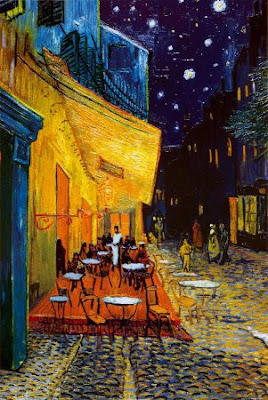
The Café Terrace on the Place du Forum, Arles, at Night, by Vincent van Gogh

Thursday, May 24, 2007

Have China Scholars All Been Bought?

Academics who study China, which includes the author, habitually please the Chinese Communist Party, sometimes consciously, and often unconsciously. Our incentives are to conform, and we do so in numerous ways: through the research questions we ask or don’t ask, through the facts we report or ignore, through our use of language, and through what and how we teach.

Foreign academics must cooperate with academics in China to collect data and co-author research. Surveys are conducted in a manner that is acceptable to the Party, and their content is limited to politically acceptable questions. For academics in China, such choices come naturally. The Western side plays along.

China researchers are equally constrained in their solo research. Some Western China scholars have relatives in China. Others own apartments there. Those China scholars whose mother tongue is not Chinese have studied the language for years and have built their careers on this large and nontransferable investment. We benefit from our connections in China to obtain information and insights, and we protect these connections. Everybody is happy, Western readers for the up-to-date view from academia, we ourselves for prospering in our jobs, and the Party for getting us to do its advertising. China is fairly unique in that the incentives for academics all go one way: One does not upset the Party.

What happens when we don’t play along is all too obvious. We can’t attract Chinese collaborators. When we poke around in China to do research we run into trouble. Li Shaomin, associate professor in the marketing department of City University in Hong Kong and a U.S. citizen, spent five months in a Chinese jail on charges of “endangering state security.” In his own words, his crimes were his critical views of China’s political system, his visits to Taiwan, his use of Taiwanese funds to conduct research on politically sensitive issues, and his collecting research data in China. City University offered no support, and once he was released he went to teach at Old Dominion University in Virginia. One may wonder what five months in the hands of Chinese secret police does to one’s psyche, and what means the Party used to silence Mr. Li. To academics in Hong Kong, the signal was not lost.


China researchers across different disciplines may not all be equally affected. Economists and political scientists are likely to come up against the Party constraint frequently, and perhaps severely. But even sociologists or ethnographers can reach the forbidden zone when doing network studies or examining ethnic minority cultures.

Our self-censorship takes many forms. We ask Western instead of China-relevant questions. We try to explain the profitability of state-owned enterprises (SOEs) by basic economic factors, when it may make more sense to explain it by the quality of enterprise management (hand-picked by the Party’s “Organization Department”), or by the political constraints an enterprise faces, or by the political and bureaucratic channels through which an enterprise interacts with its owners, employees, suppliers and buyers. But how to collect systematic information about the influence of the Party on the operation of a state-owned or state-controlled enterprise, when these are typically matters that nobody in the enterprise will speak about?
We talk about economic institutions and their development over time as if they were institutions in the West. “Price administration” regulations, central and local, abound, giving officials far-reaching powers to interfere in the price-setting process. Yet we accept official statistics that show 90% of all prices, by trading value, to be market-determined. We do not question the meaning of the Chinese word shichang, translated as “market,” but presume it to be the same as in the West.

Similarly, we take at face value China’s Company Law, which makes no mention of the Party, even though the Party is likely to still call the shots in the companies organized under the Company Law. Only if one digs deeper will one find unambiguous evidence: The Shaanxi Provincial Party Committee and the Shaanxi government in a joint circular of 2006 explicitly require the Party cell in state-owned enterprises (including “companies”) to participate in all major enterprise decisions; the circular also requests that in all provincial state-owned enterprises the chairman of the board of directors and the Party secretary, in principle, are one and the same person. At the national level, the leadership of the 50 largest central state-owned enterprises—enterprises that invest around the world—is directly appointed by the Politburo. Economists do not ask what it means if the Party center increasingly runs enterprises in the U.S. and Europe.

The governor and Party secretary of China’s central bank, Zhou Xiaochuan, writes extensively in Chinese about “comprehensively accelerating central bank work” based on the “three represents” (the Party represents the “advanced productive forces, the advanced Chinese culture and the basic interests of the Chinese people”). He describes the three represents as “guiding macroeconomic policy” in ways that defy any Western concept of logic. And yet we take this person as seriously as if we were dealing with the governor of a Western central bank, as if China’s central bank were truly setting monetary policy, and as if the channels through which monetary policy operates in China and the impact monetary policy has on the economy are the same as in the West.

Are we naïve? Or are we justified in ignoring the central bank governor’s second—or rather, first—life as Party secretary? Are we subconsciously shutting out something that we do not comprehend, or something we do not want to see because it doesn’t fit into our neat, Western economic concepts?

Article after article pores over the potential economic reasons for the increase in income inequality in China. We ignore the fact that of the 3,220 Chinese citizens with a personal wealth of 100 million yuan ($13 million) or more, 2, 932 are children of high-level cadres. Of the key positions in the five industrial sectors—finance, foreign trade, land development, large-scale engineering and securities—85% to 90% are held by children of high-level cadres.

With the introduction of each new element of reform and transition, cadres enrich themselves: the dual track price system, the nonperforming loans, the asset-stripping of SOEs, the misuse of funds in investment companies and in private pension accounts. The overwhelmingly irregular transformation of rural into urban land may well qualify as “systematic looting” by local “leaders.” Local cadres are heavily invested in the small, unsafe coal mines they are supposed to close, and nobody knows how they obtained their stakes in these operations.

A general dearth of economic information shapes our research. Statistics on specific current issues are collected by the National Bureau of Statistics on special request of the Party Central Committee and the State Council. None of this information is likely to be available to the public. The quality of the statistics that are published comes with a large question mark. Outside the realm of official statistics, government departments at all levels collect and control internal information. What is published tends to be propaganda—pieces of information released with an ulterior objective in mind. One solution for China economists then is to resign themselves to conducting sterilized surveys and to building abstract models on the basis of convenient assumptions—of perfect competition, profit maximization given a production technology, household utility maximization with respect to consumption and subject to financial constraints, etc. How much this can tell us about China is unclear.

Other China economists openly accept favors from the Party. We can use our connections to link up with government cadres. We may be hosted in field research by local governments and local Party committees. A local Party committee, at one point, helped me out by providing a car, a Party cadre and a local government official. They directed me to enterprise managers who, presumably, gave all the right answers. The hosts were invariably highly supportive, but I ended up working in exactly the box in which they were thinking and operating. (This seems to be the only research project that I never completed.) Furthermore, those who go to the field and interview cadres may not only unwillingly become a tool of the Party, but also a tool in departmental infighting.

Our use of language to conform to the image the Party wishes to project is pervasive. Would the description “a secret society characterized by an attitude of popular hostility to law and government” not properly describe the secrecy of the Party’s operations, its supremacy above the law and its total control of government? In Webster’s New World College Dictionary, this is the definition of “mafia.”

We speak of the Chinese “government” without further qualification when more than 95% of the “leadership cadres” are Party members, key decisions are reached by leadership cadres in their function as members of Party work committees, the staff of the government Personnel Ministry is virtually identical to the staff of the Party Organization Department, the staff of the Supervision Ministry is virtually identical to the staff of the Party Disciplinary Commission, and the staff of the PRC Central Military Commission is usually 100% identical to the staff of the Chinese Communist Party’s Central Military Commission. Does China’s government actually govern China, or is it merely an organ that implements Party decisions? By using the word “government,” is it correct to grant the Chinese “government” this association with other, in particular Western, governments, or would it not be more accurate to call it the “government with Chinese characteristics” or the “mafia’s front man”? Who questions the legitimacy of the Party leadership to rule China, and to rule it the way it does?
The Party’s—or, the mafia’s—terminology pervades our writing and teaching. We do not ask if the Chinese Communist Party is communist, the People’s Congresses are congresses of the people, the People’s Liberation Army is liberating or suppressing the people, or if the judges are not all appointed by the Party and answer to the Party. We say “Tiananmen incident,” in conformance with Party terminology, but called it “Tiananmen massacre” right after the 1989 Tiananmen massacre, when “incident” would have made us look too submissive to the Party.

Which Western textbook on China’s political system elaborates on the Party’s selection and de facto appointment of government officials and parliamentary delegates, and, furthermore, points out these procedures as different from how we view political parties, government and parliament in the West? By following the Party’s lead in giving the names of Western institutions to fake Chinese imitations, we sanctify the Party’s pretenses. We are not even willing to call China what its own constitution calls it: a dictatorship (a “people’s democratic dictatorship led by the working class and based on the alliance of workers and peasants, which is in essence the dictatorship of the proletariat”).

Who lays out the systematic sale of leadership positions across Chinese governments and Party committees? The Heilongjiang scandal provides the going price list from the province down to the county level, a list not to be found in any textbook. The publicly known scope of the sale of positions does not leave much room for interpretation. For these salesmen and saleswomen of government positions to have nothing to fear, the rule of the mafia and its code of silence must be powerful beyond imagination.

What is not normal is accepted as normal for China. Hackers were collecting the incoming emails of a faculty member of the University of Hong Kong from the university’s server until they were found out in June 2005, when they accidentally deleted emails. The hackers came from three mainland Internet provider addresses, and all three IP addresses are state telecommunications firms. Within China, the staff of the foreign students’ dormitories includes public security officials who keep tabs on foreign students and compile each student’s file. In a Shanghai institution of tertiary education, typing “Jiang Zemin” into a search engine from a computer located on campus, three times in a row, leads to the automatic shutdown of access to that search engine for the whole campus. The Party is rumored to employ tens of thousands of Internet “police.” Phone calls are listened to, if not systematically recorded. Emails are filtered and sometimes not delivered. Who will not learn to instinctively avoid what the Party does not want them to think or do?

Party propaganda has found its way deeply into our thinking. The importance of “social stability” and nowadays a “harmonious society” are accepted unconditionally as important for China. But is a country with more than 200 incidents of social unrest every day really socially stable, and its society harmonious? Or does “socially stable” mean no more than acceptance of the rule of the mafia?

“Local government bad, central government good” is another propaganda truism that is accepted unquestioningly in the foreign research community, informing and shaping research questions. Yet, viewing the Party as a mafia, there is no room for such niceties, and reporting outside academia indeed suggests that the center hides a rather hideous second face, and inevitably does so for a purpose.

We see the “ends”—successful reform—and don’t question the “means.” The Party’s growth mantra is faithfully accepted as the overarching objective for the country and the one measure of successful reform. Nobody lingers on the political mechanisms through which growth is achieved. The mafia runs China rather efficiently, so why worry about how it is done, and what the “side effects” are? We obviously know of the labor camps into which people disappear without judiciary review, of torture inflicted by the personnel of state “security” organs, and of the treatment of Falun Gong, but choose to move on with our sterilized research and teaching. We ignore that China’s political system is responsible for 30 million dead from starvation in the Great Leap Forward, and 750,000 to 1.5 million murders during the Cultural Revolution. What can make Western academics stop and think twice about who they have bedded down with?

If academics don’t, who will? The World Bank and other international organizations won’t because they profit from dealing with China. Their banking relationship depends on amicable cooperation with the Party, and a de facto requirement of their research collaboration is that the final report and the public statements are acceptable to Party censors. The research departments of Western investment banks won’t because the banks’ other arms likely depend on business with China.

Does this all matter? Does it matter if China researchers ignore the political context in which they operate and the political constraints that shape their work? Does it matter if we present China to the West the way the Party leadership must like us to present China, providing narrow answers to our self-censored research questions and offering a sanitized picture of China’s political system?

The size of China’s economy will exceed that of the U.S., in purchasing power terms, by 2008 or 2009. China is a country with which Western economies are increasingly intertwined: A quarter of Chinese industry is foreign-owned and we depend on Chinese industry for cheap consumer goods. Ultimately, our pensions, invested in multinationals that increasingly produce in China, depend on the continued economic rise of China. But does the West understand that country and its rulers? At what point, and through what channels, will the Party leadership with its different views of human rights and the citizens’ rights affect our choices of political organization and political freedoms in the West (as it has affected academic research and teaching)? And to what extent are China researchers guilty of putting their own rice bowl before honest thinking and teaching?

April 2007
by Carsten A. Holz
Far Eastern Economic Review

Mr. Holz is an economist and professor in the social science division of the Hong Kong University of Science and Technology.

从事中国研究的学者都被收买了吗?

从事中国研究的学术界人士,包括本文作者自己,习惯性地讨好中共,有时自己明确意识到了,有时没有意识到。这么做的动机是为了适应生存环境,我们通过以下方式讨好中共:提出某些研究课题或者不提出某些研究课题,报告某些事实或者忽略某些事实,我们使用的语言,我们讲授什么以及如何讲授。

外国研究人员必须要和中国研究人员合作,以便搜集数据,合写研究论文。调查要以中共接受的方式进行,调查内容限制在政治上可以被中共接受的范围里。对中国研究人员来说,这种选择是与生俱来的。西方研究人员跟从这种选择。

中国研究人员在独自进行学术研究时也要面对同样的限制。一些西方的中国研究学者在中国有亲属。另外一些人在中国有公寓。那些母语不是汉语的中国研究学者,已经投入多年时间学习语言,把自己的事业建立在这一巨大而无法转移的投入之上。通过与中国的关系,我们获取信息和观点,从中得到利益,因而我们保护这种关系。如此一来,每个人都满意,西方读者得到学术界的最新观点,我们自己得到工作上的成功,中共得到我们为他们提供的广告宣传。中国是唯一的,全体知识界都选择了同一条路:那就是不要让中共不高兴。

如果我们不合作,很明显后果会是什么。我们没法找到中国的合作伙伴。当在中国做研究的时候,我们就遇到麻烦了。李少民是香港城市大学市场系副教授(Li Shaomin, associate professor in the marketing department of City University in Hong Kong),美国公民,他在中国监狱里被关了5个月,罪名是“危害国家安全”。按李少民自己的解释,他的罪过包括对中国的政治制度持批评态度,访问台湾,得到来自台湾的经费进行敏感政治题目的研究,在中国收集研究数据。香港城市大学没有对李少民提供任何支持,获得自由之后,他马上离开那里,来到美国弗吉尼亚Old Dominion大学任教(Old Dominion University in Virginia)。人们会猜测落在中共秘密警察手里5个月对人的心理会有什么影响,中共到底用了什么手段来让李少民保持沉默。对香港知识界来说,这个信号被清楚的接收到了。

不同学科从事中国研究的学者并不是都受到同等的影响。经济学家和政治学家比较容易频繁挑战中共的禁忌,有时还很激烈。但甚至社会学家和人种学家也会在进行网络研究或少数族裔文化研究的时候涉足禁区。

我们的自我审查(self-censorship)有多种形式。我们提出和西方有关的问题,而回避和中国有关的问题。我们努力用基本的经济学指标来解释国有企业的利润,而实际上从其它角度分析可能更说明问题,比如从企业管理质量(由中共组织部任命管理层),或者企业和所有者、雇员、供应商以及顾客打交道所凭借的政治关系。但是如何能收集到反映中共对国有或政府控制的企业的影响的系统化信息呢?企业里根本没人愿意谈论这类事情。

我们谈论中国的经济单位及其发展,好像谈论西方的经济单位一样。中央和地方大量“价格管制”的规章,给了官员们极大的权力来干预价格制定的过程。但是我们接收官方公布的数字,上面说90%的商品的交易价格是市场决定的。我们不对中文词“市场”(shichang)的定义表示疑问,而把它直接翻译成“市场”(market),假设它的意思和西方的market是一样的。

与此类似,我们接受中国的公司法(Company Law)表面宣称的、没有提及中国共产党的字面意思,尽管有了公司法,中共仍然会对公司发号施令。只有深入了解,人们才会发现不容置疑的证据:中共陕西省委和陕西省政府在2006年发出联合指示,明确要求国有企业(包括公司,companies)的党支部参与一切企业决策,这个指示还要求全省所有国有企业,董事会主席和党支部书记原则上应该是同一个人。在国家一层,最大的50家中央控制的国有企业,这些在世界各地投资的国有企业,它们的最高管理人由中共政治局直接任命。经济学家不去问问:如果美国或者欧洲的执政党中央不断增加对企业的参与,会意味著什么?

中国中央银行行长兼党委书记周小川,写了大量关于用“三个代表”“全面促进中央银行工作”的中文文章。他用完全违背西方的逻辑概念的方式,论述三个代表是“宏观经济的指导原则”。但是我们以对待西方中央银行行长的认真态度对待这个人,好像中国的中央银行真的制定货币政策,好像中国的货币政策的操作渠道,以及对经济的影响,和西方一样。

我们很幼稚吗?或者我们忽略中央银行行长的第二身份--或者第一身份--中共党委书记,是合适的?我们下意识的回避了某些我们不理解的事情?或者我们只是因为它们不符合西方经济学概念而假装看不见?

连篇累牍的文章探讨中国收入分化日渐增加的原因。我们忽略了这样一个事实:中国拥有一亿元(1千3百万美元)或更多个人财产的3,220个人里,2,932人是中共高干的子女。五个最重要的工业领域,金融,外贸,地产开发,大型工程和安全,85%到90%的核心职位控制在中共高干子女手里。

每次改革或调整的项目出台,高干都从中自肥:价格双轨体系,贷款黑洞,国有企业财产剥离,投资公司资金和私人养老资金的滥用。不合规则的农村土地并入城市应该可以被定义为地方官僚发动的“有系统的抢劫”。地方高官有大笔投资在安全没有保证的小煤矿,这些小煤矿理论上说应该关闭,但是没人知道为什么它们依然在运转。

经济信息的普遍匮乏决定了我们的研究。当前特定课题的统计数字,都是国家统计局按照中共中央委员会和国务院的特定指示收集的。这类信息基本不会公布。而那些公布的信息的质量都要打个大问号。官方统计数字之外,各级政府部门都收集并控制内部信息。公布的信息一般往往是宣传,出于某种隐秘的动机才加以发布。研究中国经济的经济学家采取的一个办法是,放弃进行精确的调查,而是在方便的假设基础上建立抽象的经济学模型:假设有完美的竞争,新技术带来最大利润,消费和金融限制之下的家计效用最大化(household utility maximization),等等。这种办法能在多大程度上反映真实的中国还很难说。

其他研究中国经济的人公开接受中共的青睐。我们可以运用关系联络政府高官。在做实地考察的时候我们会得到地方政府和地方党委的接待,有一次,他们给我提供了一辆车,一名高官和一个地方官。他们给我介绍了一个企业主管,可以想象,他的答案都是没有任何问题的。陪同人员毫无例外都很支持,但我最终完全在他们设计的盒子里工作(这大概是我唯一没有完成的研究项目)。更有甚者,那些采访官员的人可能不仅是无意中作了中共的工具,而且可能作了政府内斗的工具。

我们大量使用符合中共自我包装的形象的语言。难道“对法律和政府充满敌意的秘密社团”,不是对中共行动的隐秘性和置于法律之上的统治方式的准确描述吗?在Webster“新世界大学字典上”(Webster’s New World College Dictionary),这是“黑手党”(mafia)的定义。

我们使用中国“政府”这个名词,却不进一步说明95%的“政府高官”是中共党员,关键决策是这些人在党务工作会议上决定的,政府人事部和党委组织部实际上是同一套人员,监察部和中共纪律委员会实际上是同一套人员,中华人民共和国中央军事委员会和中国共产党中央军事委员会是100%同一套人员。中国政府是在管理中国?还是仅仅作为中共的一个器官执行中共的决定?通过使用“政府”这个词,让中国“政府”等同于其他政府、特别是西方政府是正确的做法吗?把它称为“有中国特色的政府”甚至“黑手党的前台代表”,是不是更加准确呢?谁质疑中共统治中国的合法性,以及中共的统治方式呢?

中共的--或者说黑手党的--名词充满我们的写作和授课。我们不去问中国共产党是不是共产主义者,人民代表大会是不是代表人民,人民解放军是解放还是压迫人民,或者法官们是不是都由中共任命并且服从中共。我们说“天安门事件”,与中共的语言相一致,而在1989年天安门大屠杀刚发生后,我们称之为“天安门大屠杀”,那时用“事件”来称呼让我们显得对中共太顺从。

Monday, May 21, 2007

Zeng - TIME Most Influential person but unknown in China

I was completely moved by Zeng Jinyan and Hujia's stories when I first time heard from a friend. But, as usual there is no way to find further info from Chinese media.

Last a couple of weeks, some foreign medias started talking there were four Chinese people in “TIME 100 the most Influential People in the World”, but in China the newspaper, website have been just highlight Hu, Liu and Ma but absolutely ignored existent of Zeng Jinyan, 22 years old Chinese girl who live in Beijing, well know in the world community. And, still the largest part of general population in China doesn’t know Zeng Jinyan, the annual world’s most influential people choiced by TIME.


Yesterday, I was chosen as one of Time magazine’s “world’s 100 most influential people” in the “heroes and pioneers” category. Congratulations, interviews, phone calls and e-mails aplenty. I was actually quite surprised. To deal with all the questions, I’ve made up a simple summary of all my answers, as thanks for all concerned friends.

昨天,就我入选美国《时代》周刊”全球最具影响力100 人”之”英雄与先驱”(以下简称100人)一事,祝贺、采访和约稿的电话、电邮很多,反而让我觉得意外。面对这些问题,我简单归纳了回答,以答谢关注的朋友。

Q: How did you feel when you learned you’d been selected as one of Time’s ‘100′?
A: Yesterday morning, a Mr. Cai was the first to tell me, over e-mail, that Time had released its 100 list and I was on it.

Time reporters and photographers began to get in touch with me in fall last year. At the time they didn’t say exactly for what the interview and photos would be used. So yesterday when I was able to confirm that my name was on Time’s 100 list, I was quite happy. When the journalist phoned last year for an interview, I was a bit surprised. Whether you’re looking worldwide, in China, or even here in Beijing where we live, there’s way too many people far more influential than I am. I’m quite young, just doing work which to a large extent is not paid any attention by mainstream Chinese society, but I’m also the wife of an illegally monitored “activist” who’s often kidnapped or disappeared by police. My name’s been blocked from all mainland media—in brief, a tather particular role in society, but not one that I thought would make me one of the 100.

But no matter what, I see this as Time giving me some encouragement, an affirmation of the work I did in 2006. I sent a text message to my parents and grandparents way off in Fujian province to let them know, and phoned Hu Jia’s mother to let her know.

May 4, this day is Chen Guangcheng’s son Kerui’s fourth birthday. I’ve been keeping it in mind all along, and this morning when I woke up I got Hu Jia to send [Chen Guangcheng’s wife] Yuan Weijing a short message to congratulate the kid. In my mind, this day belongs to little Kerui. I had to get on the road, so I just hastily posted news about the 100 list up on my blog, and we stuck to our original plan to head out to Miyun Reservoir for a party with some friends, and also because of some other things, we didn’t get home until close to one a.m. and have only been able to reply now.

问:得知自己名列《时代》100人,有什么感受?
答:昨天早上,蔡先生通过电子邮件第一个告诉我《时代》公布的100 人里有我。

《时代》的记者和摄影师去年秋天开始和我联系,当时没有明确说明采访和拍照的目的。所以昨天确定地得知《时代》公布的100 人上有我的名字,我觉得高兴。倒是去年记者电话采访我时,我有点意外。不管是世界范围内,还是在中国国内,哪怕是在我们居住的北京,比我影响力大的人太多了。我年轻,做的是中国主流社会关注程度不高的社会工作,又是一个被警察经常绑架失踪、非法监禁的”活跃分子”的妻子,我的名字还被大陆的各个媒体封杀 ——总之社会角色很特殊,我没有想过自己会成为100 人之一。

无论如何,我觉得这是《时代》给我的一种鼓励,是对我2006 年的工作的肯定。我发手机短信把这条消息告诉我远在福建的父母、干爸干妈,又打电话给胡佳的母亲。

5 月4日 这一天是陈光诚的儿子克睿的4岁生日,之前我一直惦记着,早晨醒来我就让胡佳先给袁伟静发短消息祝福小孩子,在我心中这一天是属于小克睿的节日。因为要赶路,所以匆匆通过电子邮件把关于 100人的消息发到博客,我们按原计划出发到密云水库和朋友聚会,又因为其他一些事情,到夜里近一点才回到家,所以今天才回应。

Q: What do you think the reasons were why you were included in the 100?
A: I’m not sure what standards Time uses in selecting the 100, I can only guess.

My use of blogging could be one reason why I was selected. In this country we have no freedom of speech, the media are first and foremost “the Party’s mouthpiece”, and journalists and media’s right to continued existence lies in the hands of the Central Propaganda Department. Even if top-notch media workers can still sometimes break through news censorship, they’ve still no chance for long-term investigative reporting into the incidents and problems of society’s lower levels’ most in need of attention. After personally interacting with weaker groups in society, personally investigating some related social problems, and as I began reading some credible English-language reports and academic studies, I finally understood that we Chinese citizens live in a society of lies, that just like the Central Propaganda Department is just like the Ministry of Truth in “1984″, using its own language each day to “change history”, “rewrite the truth”. As well as ordering Chinese news outlets to produce “deeply-moving, positive and helpful news reports”. In a rejection of fake news, fake renditions of the truth, more and more Chinese are opening their own independent news outlets online—blogs, which even if they don’t report on major national incidents, they can still record the hundreds of different nuances to society that they see around them, even if it just a few casual “sincere” lines on their blog. In real life, people are worried about creating trouble and so tend to be rather unresponsive to political problems. But when anonymous on the internet, you can see the countless and passionate opinions strongly concerned with Chinese society, netizens tearing away at current events. And as mainstream media are unable to report on such important events and topics as illegal house arrests, forced disappearances and the civil rights and civil society movements, blogs have become a platform and a chance through which social works and independent thinkers can interact with the public. In 2006 when I opened a blog to continue writing about Hu Jia’s disappearance and long-term house arrest and my own life of being followed, as well as the stories of those with similar experiences in China, it attracted many people’s attention. Especially while Hu Jia had disappeared, my blog came to act as a rescue center, things I’d never before imagined possible. Blogs have become a tool for those in the civil rights movement, those in citizen social work, and even as a way to protect family members, and as long as people record truthful portrayals of what they encounter, it’s guaranteed that their blog content will stand out from others. The only pity is that since September 9, 2006, my blog has been blocked by police and cannot be directly viewed from within China. Even my own blog I often am able only to update it via e-mail.

There’s so many outstanding bloggers in China, be they of literary talent or depth, there’s no way I can be considered the best. That’s why blogging can’t be the only reason for my having been entered. Because incidents of illegal arrest and disappearing in China continue to increase? Because in my process of writing I make use of the impact human rights education and social work have had on me? Because people in China, even the world, pay close attention to the civil rights movment and resistances and struggles of ‘weak groups’ and lower-class citizens? Because in 2006 I wrote too many reports and letters requesting assistance to the United Nations, human rights groups, AIDS workers and environmentalists, the European Union and others with real influence, calling for too many people to join me in writing letters to Chinese leaders? Because after Hu Jia disappeared I successfully held a press conference for foreign correspondents stationed in Beijing, allowing media friends to spread my appeals to the world?

Some people say it’s to do with my bravery. I’m ashamed. Nobody knows how fearful I used to be, or how forebearing I was. In 2004 when Hu Jia first began to disappear or be placed under house arrest, I’d go searching for him, but mostly just waited for him to come back from the police. When the secret police found out where I went to university, they went through the campus Party Committee to tell me “not to continue associating with Hu Jia”, “stop wasting time on AIDS social work”, or else “start worrying about your diploma”, I was often so scared that I’d just stay quiet. Really. In 2006 between the disappearances and the house arrests, I began to learn how to fight back, and gradually stopped being so scared. Because I’d finally realized that if I can’t even protect the people I love the most, what else do I have to lose? What else am I scared of? If people can’t live with dignity, what use is there in suffering in silence? If I live in constant fear of unseen dark forces from the powerful regime and my work is thwarted, then what are the seniors, children, patients and volunteers in the AIDS villages supposed to do? Those family members of rights upholders who’ve had to deal with so much more trouble than I have, like Chen Guangcheng’s wife and son, what are they to do? I believe that as long as justice exists in our hearts, bravery follows in suit. My religious faith has also given me great support, helping me escape from fear. The smiles of my buddhist master and Buddha himself often appear in my mind, renewing my energy. Buddha says all life must deal with so some sort of pain, so I say bring it on! I gradually release my fear, but even if I’m often furious, annoyed or hurt, I still have never lost my faith.

问:你认为什么原因使你能够名列 100人?
答:我不清楚《时代》用什么准则和标准来挑选这 100人,只能做些猜想。

博客的运用可能是我入选的其中一个原因。在我们这个没有言论自由的国家,新闻媒体首先是”党的喉舌”,记者和媒体的”生杀大权”都被中宣部掌控。纵使优秀的媒体工作者能偶尔突破新闻审查,也无法长期全面深入地报道社会底层最需要关注的事件和问题。在亲身接触社会弱势群体,亲自调查一些相关的社会问题,在开始阅读具有公信力的英文报道和学术报告后,我才明白,我们中国公民生活在一个谎言社会里,中宣传部就是《 1984》” 真理部”,每日用它的语言”修改历史”、”编写事实”。并指导、命令国内新闻机构作”感人至深的正面有益的新闻报道”。为了拒绝虚假的新闻,描述真相,越来越多的中国人,在网络开办自己独立的新闻机构——博客,就算不报道国家大事,也可以如实地记叙身边的社会百态,甚至只是在博客上说些”真心”的闲话。在现实生活中,人们因为担心惹麻烦对政治性话题很冷感。在可以匿名的网络上,你会发现无数热情关注中国社会现状、抨击时政的网民。而对于主流媒体不能报道的非法软禁、逼迫失踪、维权以及公民社会运动的重要事件等话题,博客成为社会工作者、有独立思想人士的一个平台和接触公众的机会。 2006年我通过博客持续讲述胡佳的失踪、长期软禁和我被跟踪的生活,以及中国类似遭遇者的故事,引起很多朋友的关注。尤其是胡佳失踪时,博客成为一个营救平台,发挥了我事先未曾想到的作用。博客成为维权运动、公民社会工作、甚至保护家人的一个很好的工具,而只要是记录个案描写个人的真实遭遇,就注定了博客内容与众不同。唯一遗憾的是, 2006年 9月份前后,我的博客被网络警察屏蔽后,在中国大陆就再也无法直接访问了。我连自己更新博客都常常要借助电子邮件。

中国优秀的博客作者众多,无论文采、深度,我都不能算是最好的。所以写博客这一形式肯定不是入选的唯一因素。因为中国的非法拘禁、失踪事件越来越多?因为我在写博客的过程中,实践着人权教育和社会工作对我的影响?因为中国乃至世界的人民非常关注中国维权运动与弱势群体和底层人民的反抗、挣扎?因为2006 年我给联合国机构、人权组织、艾滋病和环保人士、欧盟等真正有影响力的人写了太多的报告和求助信,还号召太多的人和我一起给中国的领导人写信?因为胡佳失踪时我成功地召开了世界各国驻北京记者的招待会,让媒体朋友把我的请求传遍世界?

有些人说是因为我的勇气。我很惭愧。大家不知道我以前是多么地恐惧,又是如何地隐忍。胡佳从2004 年开始就频繁地失踪或被软禁,我寻找过他,但更多地只是等待他从警察手里回来。当国保警察找到我的大学,通过学校党委要求我”不要和胡佳继续交往”、”不要花时间在艾滋病社会工作上”,否则”小心毕业证书”时,我是多么害怕以至于常常沉默。是的,06 年的失踪和软禁事件中我开始学着反抗后,渐渐地不再恐惧了。因为我终于意识到,如果最心爱的人我都不能守护,我还有什么可以失去呢?我还害怕什么呢?如果人不能有尊严地活着,苟且隐忍又有什么意义呢?如果我总是害怕来自政权强大的看不见的黑势力,那我的工作受阻,在艾滋病村的老人、小孩、病人还有志愿者又怎么办呢?那些比我遭受更多磨难的维权人士的家属,如陈光诚的妻儿怎么办呢?相信只要心中存有正义,勇气自然而来。我的宗教信仰也给了我很大的支持,帮助我从恐惧中解脱。根本上师和佛祖的笑颜常常突然出现在我脑海中,让我充满力量。佛祖说人生终归会受各种各样的苦,那就坦然面对吧!于是我渐渐地放下恐惧,纵然时常气愤、恼怒、悲痛,但从来不失去信心。

Q: What sort of influence or changes will the list bring to you?
A: If it hadn’t been for all the friends and journalists sending me congratulations and questions, I wouldn’t even have noticed. Time is one of the world’s most influential media, so releasing this list will of course allow many people to know who these 100 are. But this can only represent a confirmation of work and contributions of the past, people will quickly forget and go look at the next new list, new incidents. This is why I never realized or thought that the being on the 100 list might bring me any effect or change. For the future I’m going going to stick with my social work; my methods won’t change because of this. Temporary international renown might make me feel safer, especially now that I’m pregnant. I think in 2007 or 2008 they might keep following me, keeping me under house arrest, but they won’t go so far as to throw me in jail. But then who knows what might actually end up happening? The friend we’re most concerned about, blind barefoot doctor Chen Guangcheng, was also chosen by Time as one of their 100 heroes and pioneers, which brought him a high degree of attention from world media, the political world and civilians, but as a retaliation for the outstanding civil rights work he did, until today he’s still in prison.

Then some friends told us that yesterday when they phoned us at home or to my cell, they got messages saying the number was out of service or had been disconnected, to try again, and even a busy signal. I definitely did use the phone a few times, but even when I wasn’t it still appeared busy. Then it got worse, as mainland papers went covering the land and sky with news that Hu Jintao and Liu Qi had made the 100, but there were no mentions of me. I was prepared for something like this, so at first I didn’t want to say anything. Who knew people would start phoning me at home to find out why. What could I do? If I didn’t explain it would have seemed like I was lying, but to explain in detail would just hurt my family. Some netizens got confused too, asking: “are mainland media being censored or are foreign media spreading lies?”

问:名列100人会给你将来带来什么影响和改变?
答:如果不是那么多朋友和记者的祝贺与提问,我意识不到这个问题。《时代》是具有世界影响力的媒体,发布名单肯定会让更多人知道这100 人。但是这只能代表着对过去工作和贡献的肯定,很快人们就会忘了,而去看新的名单、新的事件。所以我没有意识到也没有想过名列100 人会给我的将来带来什么影响和改变。将来要做的社会工作照做,方式也不会因此而改变。一时的国际知名度可能会让我更加安全,再加上我现在怀孩子,我想07 、08年他们也许会跟踪、软禁我,但不至于把我投到监狱。可是谁知道究竟会发生什么事情呢?我们最关心的朋友,盲人赤脚律师陈光诚,去年也是《时代》 100人的英雄与先驱,受到世界媒体、政界、民间的高度关注,但是他因出色的维权工作遭到报复,至今还在监狱中。

倒是一些朋友告诉我们,当他们昨天拨打我家的电话和我的手机时,听到的答复是电话有故障或无此号码、请查实,甚至手机显示正在忙——有时我确实在接电话,有时我根本没有使用手机时它也显示忙音。后来更麻烦,因为国内的报纸在铺天盖地地报道胡锦涛和刘淇入选100 人,没有关于我的介绍,对此我早有思想准备,所以原本不想说什么,谁知家里来电话追问为什么。我怎么办呢,不解释似乎我在撒谎,详细解释原因岂不是叫家人伤心!一些网友也迷惑,问”是国内媒体封锁还是国外媒体造谣”?

Q: How do you feel about being listed alongside Chairman Hu Jintao?
A: No special feeling. Our roles in society are too different. China has the highest population in the world, our economy ranks in the top few places, our system’s authority overrules our laws, the Party is bigger than the state. As the representative of a large country under this kind of system, Chairman Hu Jintao undoubtedly has greater influence. Time must have its own factors to consider in compiling the list.

Hu Jia and I are just average people, I work in a small company to make some money to feed the family, doing AIDS care, relief and rights protection work in my free time. Hu Jia is self-employed right now, or as the police put it, “urban unemployed.”

I have no special feeling about being listed alongside Hu Jintao, and have no complaints against this particular person. But, Chinese judiciary bodies suppress civil society and those who uphold rights; as Chairman he needs to take responsibility. Sometimes I’ll hope that the “leaders with conscience” within the higher levels of the Chinese government will speed up the push for social and political reforms, and in wiping out corruption, reducing the weight pressing down on the heads of the common people, allowing Chinese society to effectively improve and granting its people freedom and happiness. But, as the government releases increasingly strict internet and news censorship, policies that strike down on the people, the sheer majority of the time I don’t feel disenchanted with the authorities. I believe the future will be better, but that it needs everyone’s effort, struggle and strife, and not just waiting for the rulers’ bestowing of it upon us at some indefinite point in the future.

问:与胡锦涛主席同列一榜,有何特别感想?
答:没有特别的感受,我们的社会角色很不相同。我国是世界人口最多的国家,经济总量排在前几位,而我们体制权大于法,党大于国。胡锦涛主席作为一个大国如此体制下的最高权力代表,毫无疑问有着巨大的影响力。入选《时代》肯定有它考虑的因素。

我和胡佳都是普通人,我在一家小公司做一点工作挣钱养家,剩下的时间做艾滋病关怀、救助和维权工作。胡佳现在是自由职业者,抑或警方所言的”城市无业人员”。

我对与胡锦涛同榜没有特别的感想,对他个人也没有抱怨。但是,中国司法部门对公民社会和维权人士的镇压,作为主席的他需要负责任。偶尔我会希望中国政府高层的”有良知的领导人”加速推动社会政治改革,以消除腐败弊端,减轻压在老百姓头上的重压,让中国社会真正进步,让人民自由而幸福。可是,随着政府出台越来越严厉的对网络和新闻审查、对民间打压的政策,绝大多数时候我不对当局抱幻想。我相信将来会更好,但是必须通过每一个的努力、挣扎和奋斗,而非等待统治者遥遥无期的” 恩赐”。
cite: John Kennedy, Global Voice